 RSS Feed
 Friday, 11 September 2009 15:03 James O'toole and Meas Sokchea
Witnesses attack government's human rights record at congressional hearing
HUMAN rights and freedom of expression are under grave threat in Cambodia today, a panel of Cambodian witnesses told representatives from the US Congress on Thursday at a hearing in Washington.Sam Rainsy Party parliamentarian Mu Sochua, Licadho rights group president Kek Galabru and Community Legal Education Centre (CLEC) labour programme head Moeun Tola were invited to testify in front of the Tom Lantos Human Rights Commission, a congressional body that monitors human rights norms around the world. Copies of prepared remarks were obtained from all three by the Post.Cambodian democracy is "experiencing an alarming free fall", Mu Sochua said, according to the testimony. Having refused to pay court-ordered compensation to Prime Minister Hun Sen in connection with her defamation conviction last month, Mu Sochua warned that she will be sent to prison in the absence of intervention by the US and other donor countries.Moeun Tola's testimony focused on labour conditions in the Kingdom, which he said had deteriorated sharply in the last few years. He expressed concern for the security of union organisers in Cambodia, citing the murders of officials from the Free Trade Union of the Workers of the Kingdom of Cambodia including Chea Vichea, Ros Sovannareth and Hy Vuthy. Moeun Tola also criticised Cambodia's lack of a minimum wage, and said that in the only industry with such a standard in place - the garment industry - wages are "insufficient, especially in light of rising costs of food, health problems related to work and other necessities". He called for the US to institute duty-free status for Cambodian textiles and to urge the Cambodian government to fully implement the 1997 Labour Law.Kek Galabru highlighted the status of land and housing rights in Cambodia, noting that more than 250,000 people have been victims of land-grabbing since 2003 in the 13 provinces in which Licadho operates."Cambodia's increasing landlessness is a recipe for future economic and social instability," she said. She also cited recent threats to freedom of expression, outlining several of the nine criminal complaints the government has filed against members of media, opposition and civil society organisations since April of this year. In view of these developments, the Licadho president said that her organisation "believes that the country is facing the gravest threat to its democratic development since the 1997" factional fighting. Mu Sochua echoed these criticisms, calling for visa sanctions on officials suspected of corruption and a suspension of US aid to the Ministry of Defence until a regulatory framework is established for mineral and petroleum concessions.Govt denies repression On Wednesday, the Cambodian Embassy in Washington released a statement defending its government's record on human rights, though it did not mention the congressional hearing specifically."Like any democratic country in the world, Cambodia cannot [allow] the proliferation of voluntary public defamation and disinformation intended to create social disorder," the statement said. Koy Kuong, spokesman for the Ministry of Foreign Affairs, repeated his criticism that the hearing was "unfair" because no representatives of the Cambodian government were invited. "The opposition groups have never said anything good about the government," he said Thursday. "Whenever there is good news, they ignore it."Though all three witnesses called for specific reforms in US policy toward Cambodia, it is not clear whether the hearing will generate any substantive changes.Chea Vannath, an independent analyst and the former executive director of the Centre for Social Development, noted that the commission has no legislative authority in Congress, only the ability to make recommendations."In the political structure of the United States, it takes more than a hearing to change policy," she said. Still, she added, such events are important because of their "indirect effects", and their capacity to raise awareness of rights issues."This is an international mechanism to promote the rule of law, democracy and international standards," she said.
"I am one of the thousands of innocent journalists, trade union leaders, teachers and villagers who are tried by a judicial system that is well known for corruption, for incompetence and for acting under the control of the government and those who have political influence and money.... As the direct result of widespread corruption in the courts, Cambodian families find themselves in debt as bribes must be paid to court officials and to judges just to have access to justice or to be free from legal persecution."- Mu Sochua, SRP parliamentarian
"The Cambodian authorities regularly use violence or the threat of it to restrict workers' rights to peacefully protest over legitimate labour rights issues. Peaceful gatherings outside factories by striking workers have repeatedly been forcibly dispersed by armed police in recent years. In the process, strike leaders and workers have been injured and may be unlawfully arrested. Local government authorities routinely reject requests for unions to march and rally in public areas."- Moeun Tola, head of labour programme unit, CLEC
"Cambodia is currently facing a crisis in human rights, which constitutes a backward slide in the country's democratisation and efforts to promote good governance. The international community, including the United States, made a significant contribution to bringing peace and the concept of democracy to Cambodia in the early 1990s. Sadly, the hard-won steps which have been made toward pluralistic democracy, and toward economic and social development, are now in danger."- Kek Galabru, president of Licadho
Cambodians testify in US
 Friday, September 11, 2009 |
 0
comments
0
comments
 Labels:
National News
Labels:
National News
Many conservatives enraged over Obama school speech
Saturday, September 5, 2009 |
CNN(CNN) -- The White House found itself on the defensive Friday over what would ordinarily be considered the most uncontroversial of events: a back-to-school speech to the nation's children.
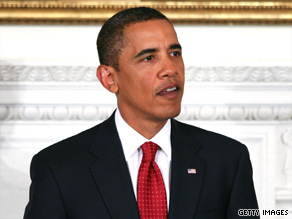
The White House says President Obama's address next week to schoolchildren isn't a policy speech.

The White House said the address, set for Tuesday, and accompanying suggested lesson plans are simply meant to encourage students to study hard and stay in school.
Many conservative parents aren't buying it. They're convinced the president is going to use the opportunity to press a partisan political agenda on impressionable young minds.
"Thinking about my kids in school having to listen to that just really upsets me," suburban Colorado mother Shanneen Barron told CNN Denver affiliate KMGH. "I'm an American. They are Americans, and I don't feel that's OK. I feel very scared to be in this country with our leadership right now."  Watch how some parents are upset »
School administrators are caught in the middle of the controversy. Some have decided to show the president's speech, while others will not. Many, such as Wellesley, Massachusetts, superintendent Bella Wong, are deciding on a class-by-class basis, leaving the decision in the hands of individual teachers.
"The president of the United States has asked us to facilitate his outreach to students. And in that vein, we have decided to honor the request," Wong told CNN. "We'll trust in his judgment."
Republican leaders have not shied away from the debate. Minnesota Gov. Tim Pawlenty, a possible contender for the GOP's 2012 presidential nomination, said Friday the classroom is no place to show a video address from Obama. Watch the debate over the president's speech »
"At a minimum it's disruptive. Number two, it's uninvited. And number three, if people would like to hear his message they can, on a voluntary basis, go to YouTube or some other source and get it. I don't think he needs to force it upon the nation's school children," he told reporters at the Minnesota State fair.
Florida GOP Chairman Jim Greer released a statement this week accusing Obama of using taxpayer money to "indoctrinate" children.
"The idea that school children across our nation will be forced to watch the president justify his plans ... is not only infuriating, but goes against beliefs of the majority of Americans, while bypassing American parents through an invasive abuse of power."
Nonsense, the White House replied.
"The goal of the speech and the lesson plans is to challenge students to work hard, stay in school and dramatically reduce the dropout rate," an administration spokesman said. "This isn't a policy speech. It's a speech designed to encourage kids to stay in school."
White House officials noted that Obama's speech, which will be available for anyone to view on the Web on Monday, is not unprecedented. President George H.W. Bush delivered a nationally televised speech to students from a Washington D.C., school in the fall of 1991, encouraging them to say no to drugs and work hard.
In November 1988, President Ronald Reagan delivered more politically charged remarks that were made available to students nationwide. Among other things, Reagan called taxes "such a penalty on people that there's no incentive for them to prosper ... because they have to give so much to the government."
Charles Saylors, president of the national Parent Teacher Association, said the uproar over Obama's speech is "sad."
"The president of the United States, regardless of political affiliation, should be able to have a presentation and have a pep talk, if you will, to America's students," he told CNN.
Some of the controversy surrounding Obama's speech stems from a proposed lesson plan created by the Education Department to accompany the address. An initial version of the plan recommended that students draft letters to themselves discussing "what they can do to help the president."
The letters "would be collected and redistributed at an appropriate later date by the teacher to make students accountable to their goals," the plan stated.
After pressure from conservatives, the White House said that the plan was not artfully worded, and distributed a revised version encouraging students to write letters about how they can "achieve their short-term and long-term education goals."
A number of the president's critics, however, were not placated.
"As far as I'm concerned this is not civics education -- it gives the appearance of creating a cult of personality," said Oklahoma state Sen. Steve Russell, a Republican.
White House Press Secretary Robert Gibbs dismissed the whole dispute Friday as part of "the silly season."
The administration, while acknowledging it made a mistake with the initial lesson plan, has been frustrated by the controversy, said CNN Senior White House Correspondent Ed Henry.
It was a much different atmosphere when Bush made similar remarks 18 years ago, Henry noted.
"Let's face it. You didn't really have blogs. You didn't have as many cable networks out there as you do now," Henry said. "I think people just sort of take something and blow it out of proportion in this environment right now."
The controversy is the latest example of how sharply polarized political debate has become.

0
comments
Labels:
International News
